From June Wild Strawberries to High-Summer Forest Berries
Summer foraging opens quietly along sunny forest margins before spreading deep into woodlands and peatlands. By mid to late June, wild strawberries begin turning bright red along warm woodland tracks, dry grassy banks, and sunlit clearings. Because they thrive on open warmth and light, the earliest handfuls usually come from south-facing edges and sheltered roadside verges.
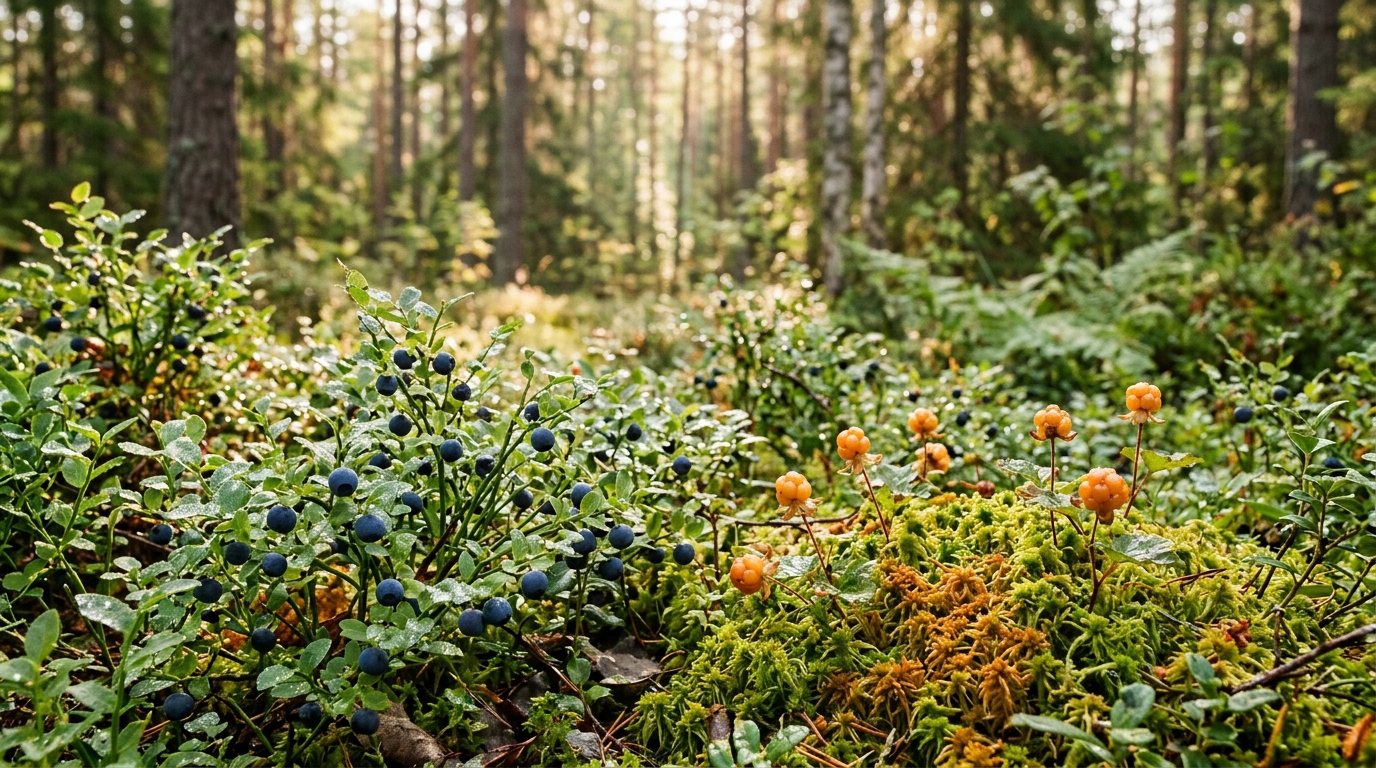
As July arrives, the foraging focus shifts into cooler mossy timber and open northern mires. Golden cloudberries ripen first across northern raised bogs, followed closely by carpets of dark-blue bilberries beneath fresh spruce and pine canopies, while late July and August bring sweet wild raspberries to sunlit clear-cuts and forest edges.
Cloudberries on Raised Bogs and Bilberries in Mossy Forests
Cloudberries are iconic berries of northern and boreal peatlands, growing on open, nutrient-poor raised bogs and wet sphagnum hummocks. They depend on cool, acidic peat and uninterrupted summer daylight, which makes them abundant across Fennoscandia, the Baltic states, and northern moorlands, while remaining absent or strictly protected in warmer southern lowlands.
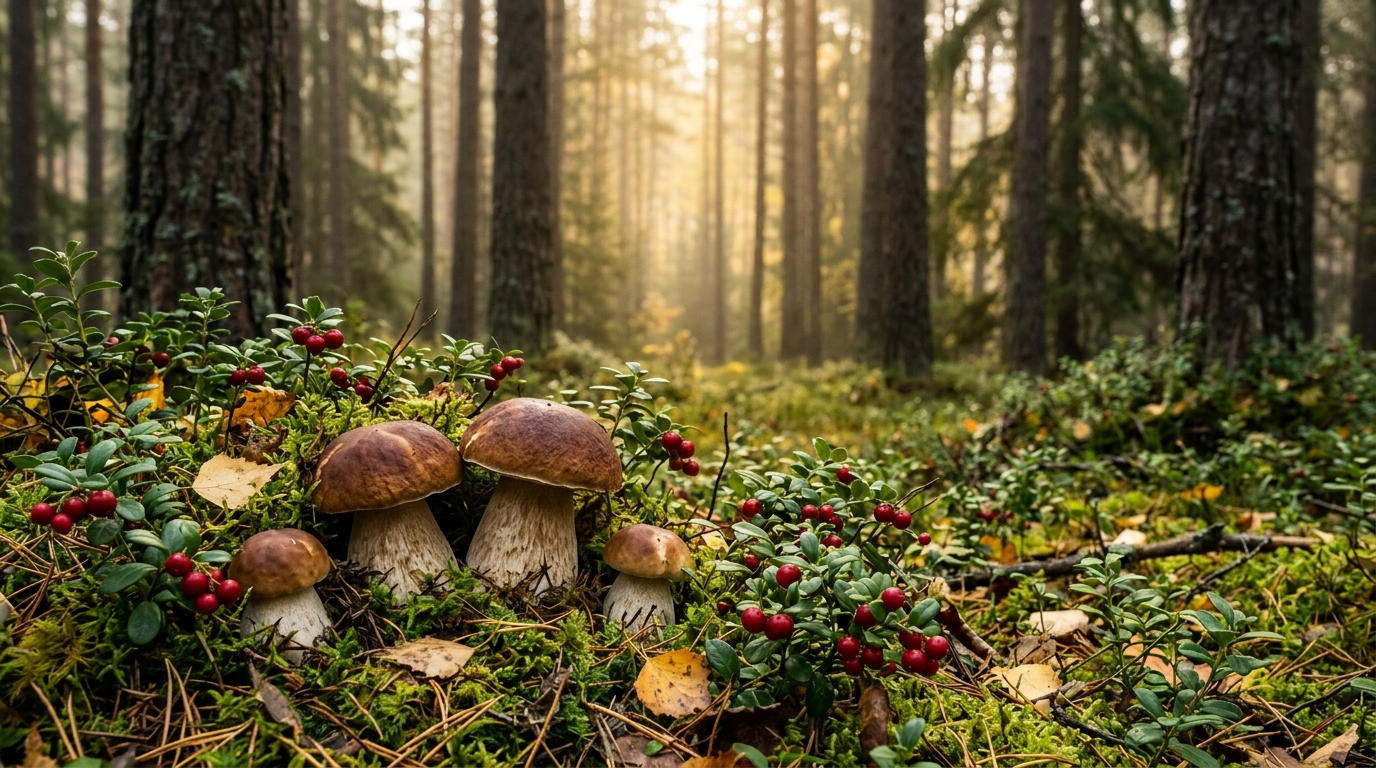
Bilberries prefer a very different shelter under partial tree cover. Their richest, juiciest stands develop on acidic, consistently moist soils in mossy spruce and mixed pine-spruce forests, where thick feather moss holds steady humidity around shallow roots even during warm midsummer spells.
- Wild strawberry (June to early July): sunlit forest edges, dry banks, and open grassy tracks.
- Cloudberry (mid-July): open northern raised bogs, transitional mires, and wet sphagnum hummocks.
- Bilberry (July to August): shaded, mossy spruce and pine-spruce forests on acidic moist soils.
- Wild raspberry (late July to August): bright clear-cuts, windthrow gaps, and nitrogen-rich woodland margins.
Wild Raspberries on Clear-Cuts and Early-Summer Chanterelles
Wherever timber harvesting or winter storms open a sunny gap in the canopy, wild raspberries quickly take hold. Disturbed, nitrogen-rich forest soil fuels vigorous thorny canes that often reach peak fruiting two to four years after clearing, turning open sunny patches into productive late-July and August berry spots.
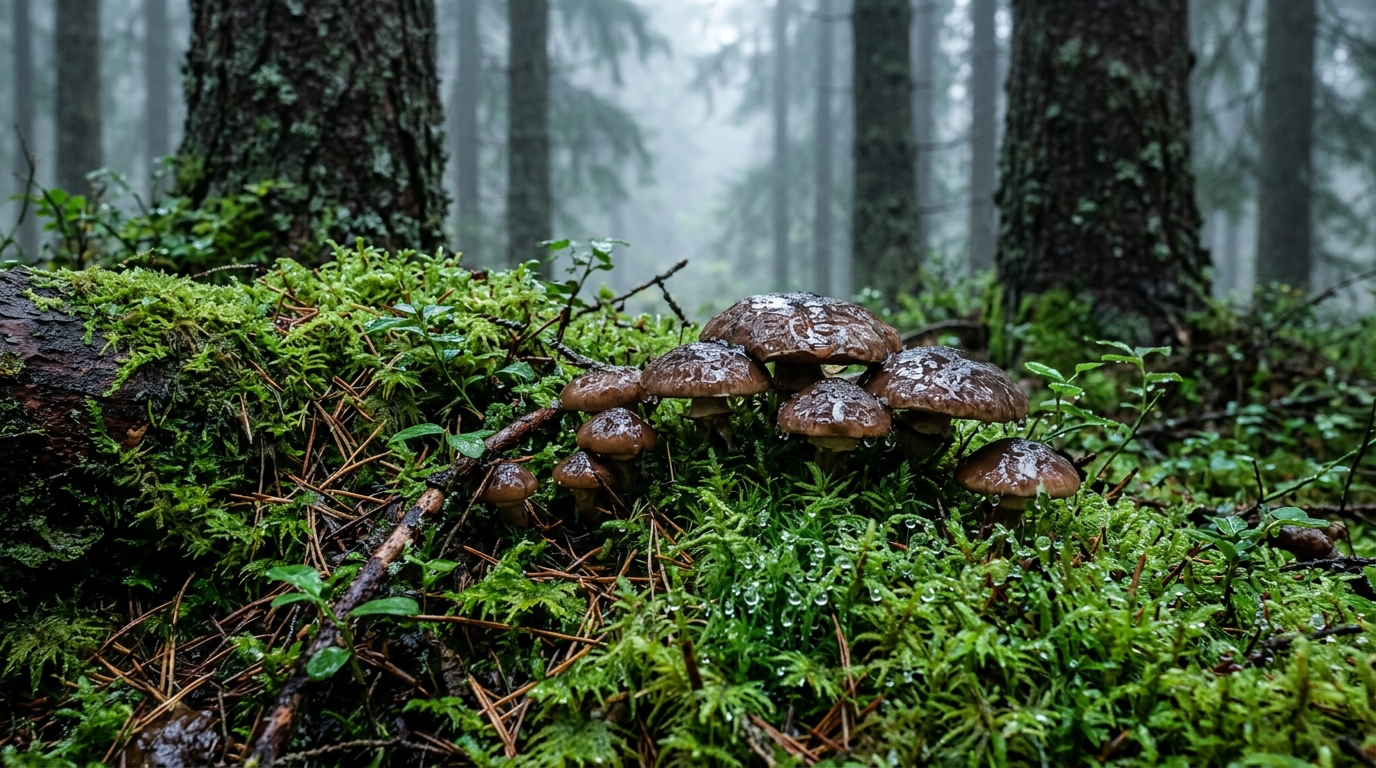
Mid-summer is not solely for berry pickers, because warm June and July rain showers also wake up the first golden chanterelles. Unlike delicate autumn mushrooms that wait for cool nights, chanterelles fruit readily in warm summer soil once enough rain penetrates the moss layer.
These early chanterelles favor well-drained mossy pine, spruce, birch, or oak-beech stands where light filters through the canopy. When warm rain alternates with sunny days, it is common to find bright yellow chanterelle buttons right beside ripening bilberry bushes on the same walk.
Why Summer Berry Yields Vary: Frost, Pollination, and Rain
A generous July harvest is largely decided months earlier during spring bloom. Bilberries and cloudberries flower in late spring, and a single clear, frosty night can blacken open blossoms across low forest hollows and exposed peat bogs, sharply reducing berry set even when plants look healthy.
Pollination and mid-summer moisture play an equally decisive role. Bumblebees and wild solitary bees carry out most forest berry pollination, so cold, windy, or rainy weather in May and early June keeps pollinators grounded. Once fruit sets, timely June and July showers swell both bilberries and early chanterelles, whereas prolonged summer drought leaves berries small and scarce.
Practical Field Tips for Summer Berry and Bog Foraging
Summer trips demand very different preparation from crisp autumn mushroom walks. On open clear-cuts and treeless raised bogs, direct sunlight reflects off pale moss and dry branches, causing heat fatigue and dehydration much faster than expected under seemingly mild temperatures.
Peatlands and dense summer undergrowth also call for extra awareness of footing and biting insects. Wet sphagnum carpets can conceal soft waterlogged hollows, ticks wait along grassy berry margins, and mosquitoes, blackflies, and horseflies peak in warm humid air. Always check local access and conservation rules before entering protected bogs.
- Pack plenty of drinking water, wear a breathable hat, and use light long sleeves on exposed clear-cuts and bogs.
- Apply insect repellent for mosquitoes and horseflies, and perform a thorough tick check after leaving tall grass or shrubs.
- Wear waterproof boots with good grip on wet bogs, testing soft green moss gently before putting your full weight down.
- Head out early in the morning or later in the evening when temperatures are cooler and biting flies are less active.
Finding Bilberry Stands, Bogs, and Clear-Cuts with Atveria
Instead of wandering along unfamiliar forest roads by guesswork, you can narrow down promising summer habitats with Atveria's interactive map layers. The Berry layer evaluates forest site types, soil moisture regimes, and tree species composition to highlight fresh mossy spruce and pine stands suited to bilberries and bog-edge habitats.
When you want to pair berries with early chanterelles or track down sunny raspberry clearings, Atveria lets you inspect stand age and switch directly to the Mushroom layer. Filtering for young stands helps locate bright clear-cuts, wet peatland site types point toward bog margins, and public forest boundaries clarify where you can forage before setting out.