Early Autumn Peak: Porcini, Birch Boletes, and Aspen Boletes
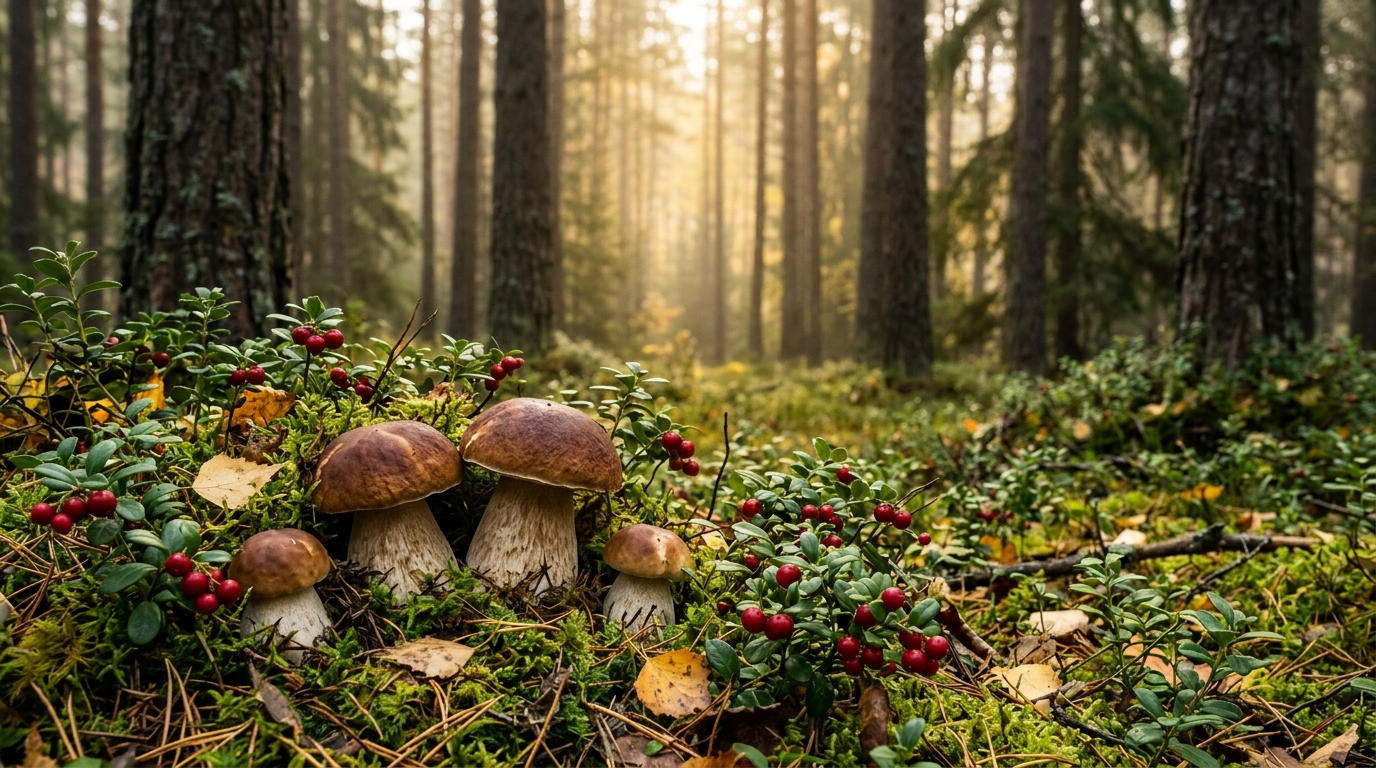
When late August and early September bring cooler nights on top of lingering summer soil warmth and steady rain, forests across northern and central Europe enter the peak wave of boletes. The prized penny bun or porcini (Boletus edulis) favours well-drained soils in mature spruce, pine, beech, oak, and mixed stands. Early flushes regularly appear along sunlit woodland edges, mossy forest tracks, and open patches beneath tall canopies where the ground dries lightly between showers.
Alongside porcini, birch and aspen boletes fruit heavily in tandem with their host trees. Because their mycorrhizal partnerships are tightly bound to specific broadleaf species, checking younger mixed stands and regenerating clearings alongside older woods often pays off. Harvesting young, firm caps before warm spells invite fly larvae ensures clean baskets and better texture for drying or pan-frying.
- Porcini (Boletus edulis): thrives in mature spruce, pine, beech, and oak stands on mossy or lightly grassed forest floors.
- Birch bolete (Leccinum scabrum): common in damp to fresh birch stands, woodland margins, and mossy alder-birch transitions.
- Aspen boletes (Leccinum aurantiacum and L. versipelle): bright orange-capped boletes paired strictly with aspen or birch trees.
Lingonberries in Dry and Fresh Pine Forests
By mid-September, wild lingonberries (Vaccinium vitis-idaea) reach their deep ruby colour and crisp, tart flavour. Unlike bog-dwelling berries, lingonberries thrive in bright, dry to fresh pine forests and open sandy heathlands. Light-filtering pine canopies and acidic, well-drained soils create ideal conditions for dense, low evergreen carpets that fruit reliably year after year.
The richest patches tend to cluster along sunlit ridges, older forest openings, and mossy Vaccinium-type pine stands where sunlight reaches the ground without parching the roots. Picking only fully reddened berries and handling the woody stems gently protects next season's flower buds, which are already forming before winter arrives.
- Prime habitat: dry and fresh lichen-rich or Vaccinium pine heaths on sandy, acidic soils.
- Ripeness cues: uniform deep red skin, firm crunch, and tart aromatic juice without pale unripe cheeks.
- Gentle harvesting: hand-pick or comb carefully with wide teeth so evergreen leaves and next year's buds stay intact.
Milk Caps and Black Trumpets in Cooling Woodlands
As daytime temperatures settle around ten degrees Celsius and morning dew lingers well past noon, milk caps take centre stage. In pine stands, saffron milk caps (Lactarius deliciosus) push through needle litter and mossy edges, while young and middle-aged spruce stands produce abundant false saffron milk caps (Lactarius deterrimus). Both release bright carrot-orange latex when cut, though the spruce species gradually stains wine-red and greenish over several hours without losing its culinary appeal.
During the exact same cool, damp window, black trumpets (Craterellus cornucopioides) emerge in shaded broadleaf and mixed forests, especially under beech, oak, hazel, and lime. Their funnel-shaped, dark grey-to-black caps blend seamlessly into wet fallen leaves and shadows on rich, often slightly calcareous slopes. Spotting the first trumpet usually reveals dozens more clustered quietly within arm's reach.
Trimming earthy stem bases right in the forest keeps baskets clean for both species. Because black trumpets have thin, dry flesh, they dehydrate rapidly at low heat and store for months as an intense seasoning for autumn soups and sauces.
Bog Cranberries Ripening After the First Light Frosts
Once deciduous trees begin shedding their leaves, attention shifts from mineral-soil forests to open peatlands and raised bog margins. Bog cranberries (Vaccinium oxycoccos) trail on thread-thin stems directly across wet sphagnum moss, often where scattered bog pines meet open peat hummocks. While berries already turn red in late September, their sharpest sourness mellows noticeably only after the first light autumn frosts.
Frost breaks down part of the berry's starches into simple sugars and softens the skin, creating a rounder sweet-tart balance prized for sauces and preserves. Rich in natural benzoic acid, clean and dry bog cranberries also keep remarkably well for months in a cool pantry or refrigerator without cooking.
- Habitat zone: sunlit raised bog edges, transitional fens, and damp sphagnum hummocks among stunted pines.
- Best harvest window: right after the first one or two light frosts when berries soften slightly and taste sweeter.
- Peatland footing: step from firm hummock to hummock, avoid dark waterlogged hollows, and wear waterproof boots.
Frost-Tolerant Late-Autumn Mushrooms and Short-Day Safety
The fungal season does not end with the first white frost on open meadows. Several late-autumn species rely on cool, humid weather and continue fruiting well into October and November until hard ground freezes arrive. Yellowfoot or winter chanterelles (Craterellus tubaeformis) form generous carpets across damp, mossy spruce woods and mixed conifer stands, sheltered from light frosts by thick moss.
Wood-decaying mushrooms extend the calendar even further. Velvet shank (Flammulina velutipes) fruits in dense clusters on dead deciduous wood such as willow, aspen, and alder, surviving freeze-thaw cycles, while oyster mushrooms (Pleurotus ostreatus) emerge on fallen beech, poplar, and willow logs. Because deadly funeral bells (Galerina marginata) also grow on rotting wood in autumn, always verify that velvet shanks lack a stem ring, show a dark velvety lower stem, and drop a pure white spore print.
Late-season days shrink rapidly, and dense conifer canopies turn dim long before sunset. Plan shorter loops, carry a headlamp and charged power bank, and check local foraging rules and conservation boundaries before heading out.
- Yellowfoot chanterelle (Craterellus tubaeformis): thrives in wet mossy spruce forests and persists past early light frosts.
- Velvet shank (Flammulina velutipes): sticky orange-amber cap, dark velvety stem, white spore print; rule out Galerina marginata every time.
- Oyster mushroom (Pleurotus ostreatus): shelved clusters on dead hardwood logs triggered by crisp autumn temperatures.
- Short-day safety: wear waterproof layered clothing, grippy boots, carry a light source, and turn back well before dusk.
Using Atveria to Target Pine Heaths, Spruce Stands, and Bog Edges
As autumn progresses from September warmth to November frost, productive habitats shift week by week from dry pine heaths to mossy spruce stands and peatland borders. Instead of spending scarce daylight driving down unfamiliar forest roads, Atveria helps you shortlist promising public stands before you lace up your boots.
By filtering the map by dominant tree species, forest site type, and stand age across 13 European countries, you can separate dry pine heaths for lingonberries and saffron milk caps from damp middle-aged spruce stands for yellowfoot chanterelles, or pinpoint state-owned bog margins for late cranberries. Paired with satellite imagery and clear public forest boundaries, focused planning lets you make the most of every crisp autumn hour and return safely before dark.