Autumn Hunting Seasons Across European Forests
Late summer and autumn bring peak mushroom and berry harvests alongside the busiest hunting months of the year across Europe. Driven hunts for wild boar, roe deer, and red deer take place regularly in Central, Western, and Southern Europe, while autumn moose and elk hunts get underway across the Nordic and Baltic countries. Because these schedules overlap directly with prime foraging weeks, the same woodlands often host both foragers and hunting parties.
Before entering a forest, always check local hunting club announcements, municipal notices, and state forestry updates. Many areas post temporary warning signs, barrier tapes, or dates at trailheads and forest access roads when driven hunts are active. Hunting calendars and access restrictions vary widely by country and region, so check local rules carefully and choose a different woodland whenever active hunting signs are posted.
Stay Visible: High-Visibility Clothing and Smart Timing
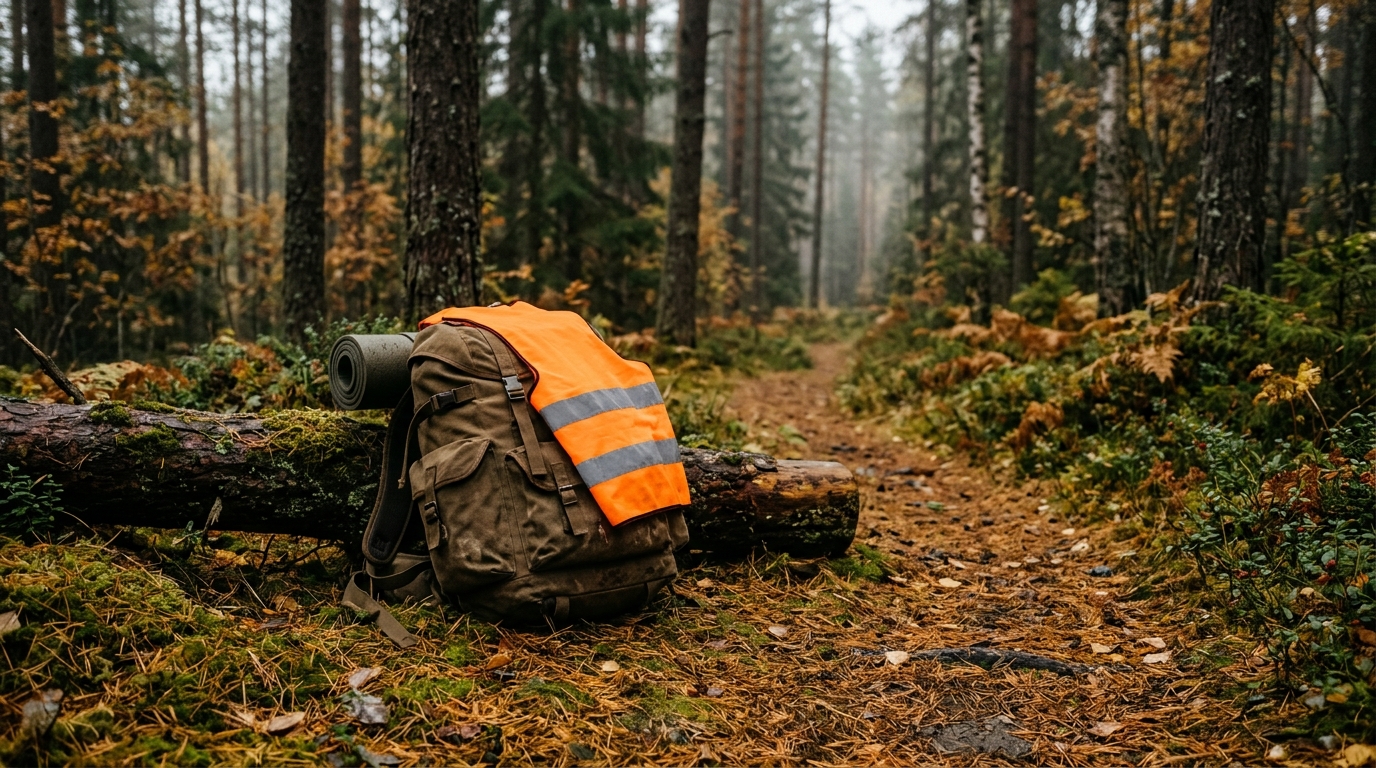
Autumn forests are frequently misty, shaded, and filled with tall ferns or dense saplings where earth-toned outdoor clothing blends seamlessly into the background. Wearing a blaze-orange or neon high-visibility vest paired with a bright cap makes you stand out immediately to hunters and forestry workers, especially when crouching low to pick mushrooms or berries.
Timing your outing is just as important as your clothing. Both large wildlife and stationary hunters are most active around dawn and dusk when low light reduces visibility and shapes become harder to distinguish. Plan your foraging trips for full daylight hours, stick to open stands or clear paths on active hunting days, and keep companions within sight.
- Wear a blaze-orange or neon-yellow vest or outer jacket instead of camouflage, green, or brown clothing.
- Put on a bright orange or neon cap or beanie, since your head is often the first part visible above undergrowth.
- Avoid foraging around dawn and twilight during autumn, and pack a headlamp even for daytime walks.
- Turn back or move to another area immediately if you spot driven-hunt warning signs, marker tape, or occupied shooting stands.
Wild Boar, Moose, Bears, and Wolves: Large Wildlife Encounters
Wild boar inhabit forests across most of continental Europe and the Baltic states and can react defensively if surprised at close range. Sows with piglets are particularly protective and may charge if they feel cornered or separated from their young. If you spot boar or striped piglets in dense brush, never step between them and cover, stay calm, and back away quietly the way you came.
In Nordic, Baltic, and Polish woodlands, moose require extra caution during the autumn rutting season in September and October. Rutting bulls can be territorial and unpredictable, while cows remain protective of their calves throughout the year. Always give moose plenty of space, avoid blocking their natural escape route, and wait calmly until the animal moves off.
Across Nordic, Baltic, Eastern European, and certain mountain forests, you may also share habitat with brown bears and wolves. Make gentle, steady noise by talking or letting footsteps sound naturally in thick cover so animals hear you early and move away on their own. If you ever encounter a bear or wolf, never run, never approach cubs, maintain calm awareness without aggressive shouting, and back away slowly while leaving a clear exit path.
Dog Leash Rules and European Adders on Sunny Clearings
Most European countries enforce strict dog leash rules during spring and early summer wildlife breeding seasons as well as during active autumn hunting periods. An unleashed dog can disturb ground-nesting birds, chase deer, or provoke a wild boar or bear and lead the agitated animal straight back to you. In active hunting zones, free-roaming dogs also risk serious injury or confusion with hunting hounds, so always check national and municipal leash regulations.
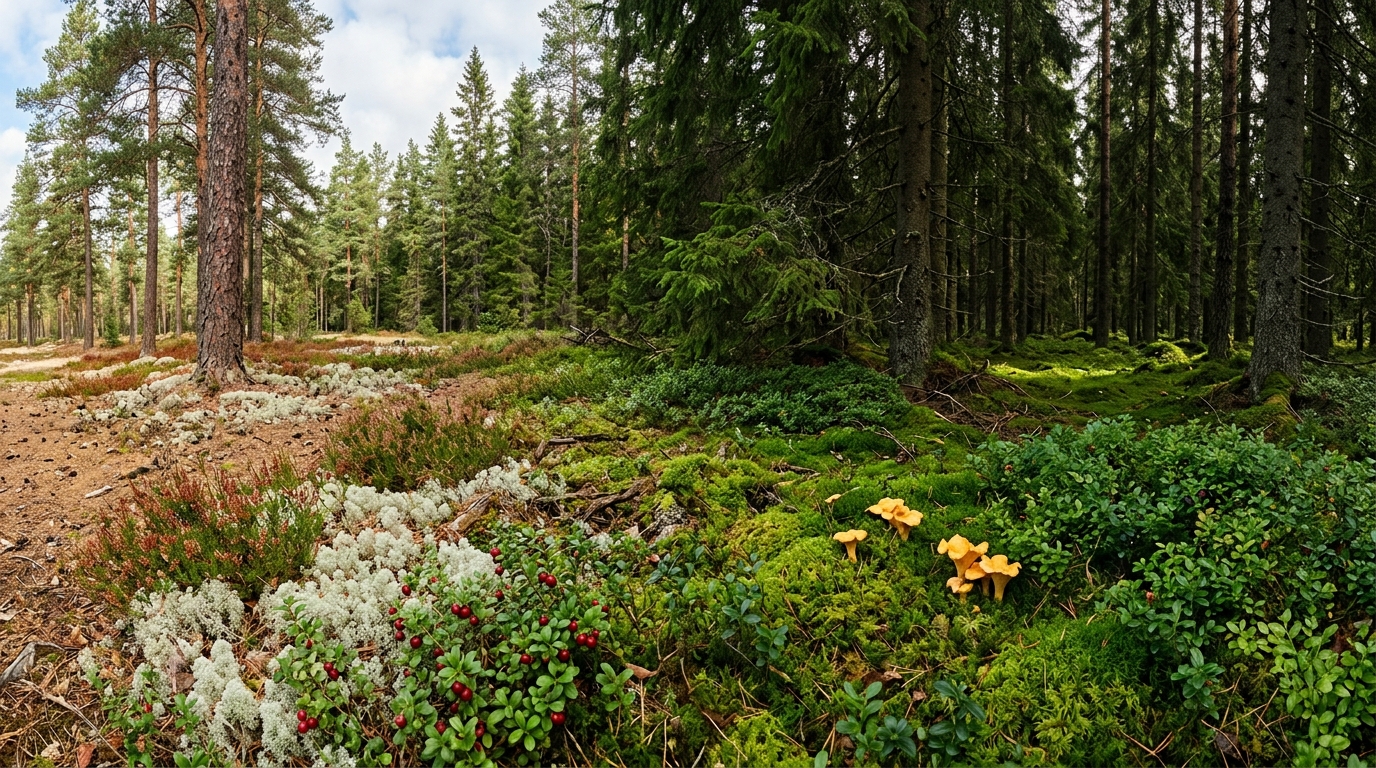
From warm spring days through early autumn, European adders and related viper species frequently bask on sunny clearings, heather edges, south-facing slopes, and stone or brushwood piles. Wear sturdy ankle-covering leather or rubber boots with long trousers, watch where you place every step, and never reach blindly into tall grass, hollow stumps, or dense berry shrubs. If a snakebite is suspected, stay calm, keep the limb still, and seek professional medical care immediately.
Practical Forest Safety Checklist Before You Head Out
Most woodland safety incidents can be prevented with a quick check before you leave home. Verifying weather, hunting notices, and basic visibility gear takes only a couple of minutes and lets you focus calmly on finding mushrooms and berries.
Once inside the forest, avoid wearing headphones so you can hear approaching vehicles, barking hunting dogs, or wildlife moving through brushwood. Always let someone know which forest area you plan to visit and when you expect to return.
- Check municipal, forestry, and local hunting club notices and respect every warning sign at forest entrances.
- Wear a high-visibility orange or neon vest and bright cap, and plan your walk for full daylight hours.
- Keep dogs on a leash according to seasonal wildlife protection laws and local hunting-zone rules.
- Wear sturdy boots and inspect sunny clearings, heather, and undergrowth before stepping or reaching in for adders.
- Make gentle noise in dense Nordic or Baltic forests; never run or approach cubs if you meet large wildlife.
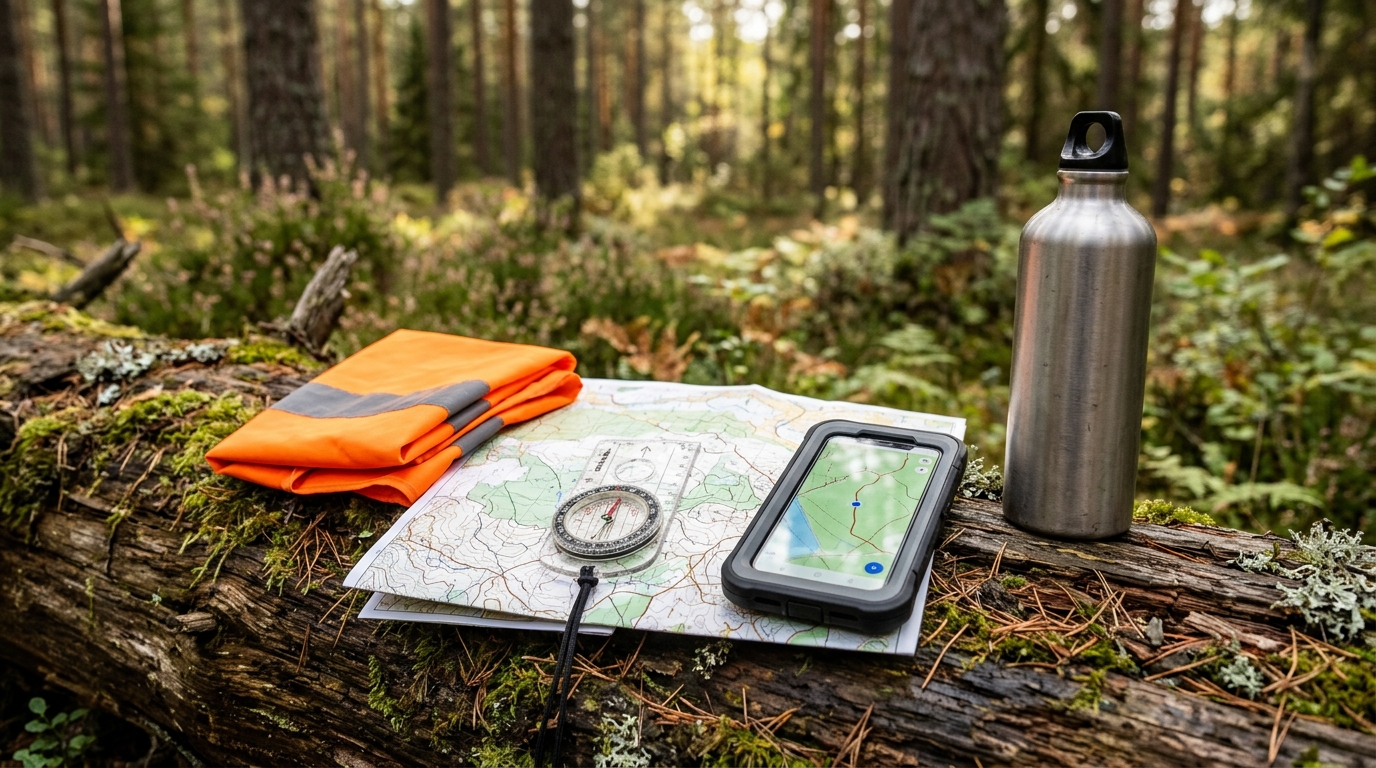
- Pack a charged phone with offline maps, basic first-aid supplies, a whistle, and water, and share your route.
Planning Safer Routes with Atveria
Thoughtful route planning reduces the time spent pushing through dense thickets where visibility drops and wildlife often rests during the day. On Atveria's interactive map, you can inspect public forest stands, tree species, forest site types, and stand age across 13 European countries before heading out.
By choosing mature, open stands and planning your walk along public forest roads and sunlit clearings, you keep clear sightlines for both yourself and others in the woods. Checking public forest boundaries and alternative access points in advance also makes it easy to switch to a quieter area if you arrive and see local hunting notices posted at a trailhead.