Plan your trip before leaving the trailhead
Most forest emergencies begin before a single step is taken under the canopy. Checking the local weather forecast, wind speed, and sunset time gives you a realistic window for your outing, especially in autumn when daylight fades rapidly under dense tree cover. Always leave a brief plan with a friend or family member stating your parking spot, general search area, and the hour you expect to check back in.
Start with a fully charged phone, set a firm turnaround time well before dusk, and adjust your pace for uneven ground, windfall, and dense undergrowth. Walking off-trail to check promising mushroom or berry habitat takes far more time and energy than covering the same distance on a gravel road, so leaving a generous safety margin ensures you return calmly before dark.
Offline maps, compasses and reliable landmarks
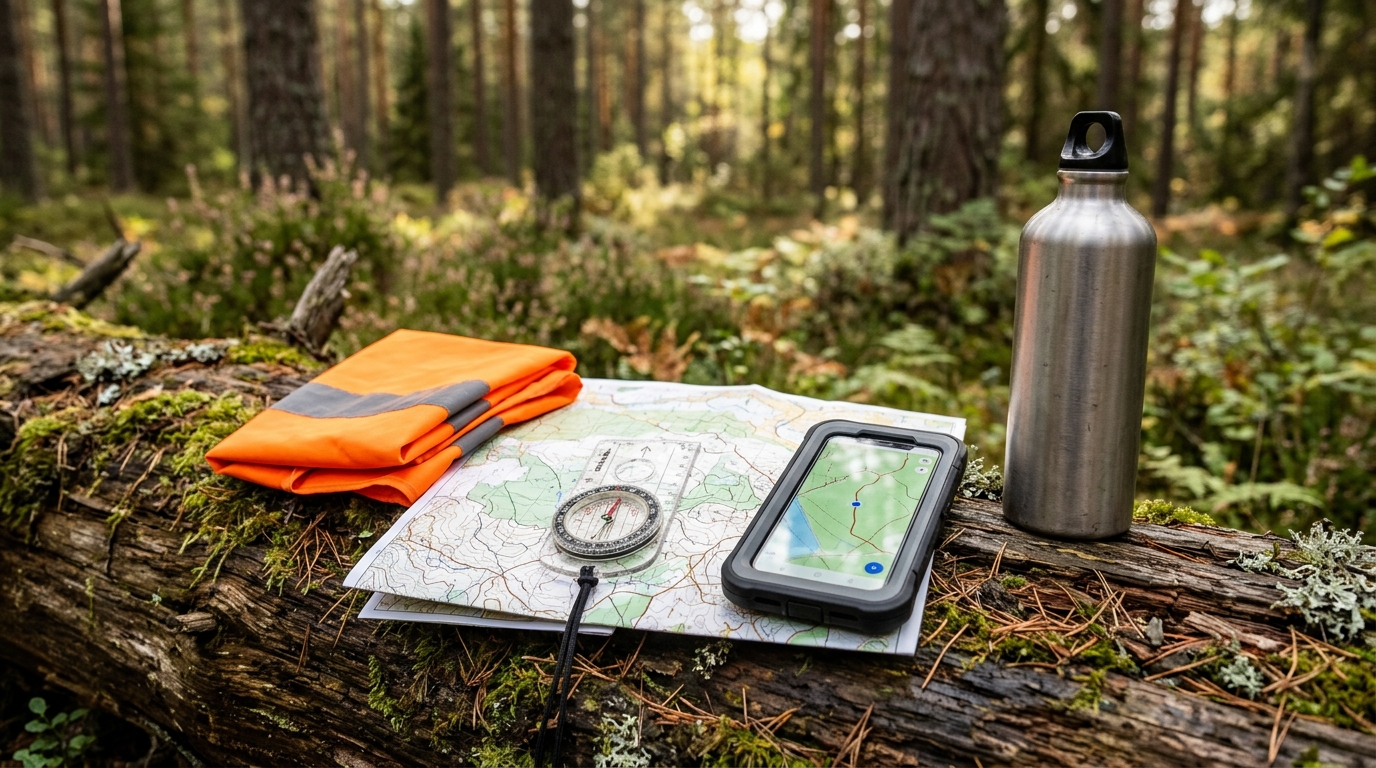
Mobile data often disappears in deep valleys and remote timberlands, making pre-downloaded offline maps indispensable. Carry a charged power bank and a short charging cable inside a sealed waterproof pouch because cold temperatures drain lithium batteries faster than expected. Alongside your phone, pack a classic baseplate compass and practice taking a basic bearing toward a known road or parking area before you venture off the track.
As you walk into the woods, pay steady attention to large linear features that serve as natural handrails or catchlines. Paved roads, forest tracks, drainage ditches, streams, railway lines, and power corridors are far easier to follow or intersect than trying to retrace winding footpaths between individual trees. Noting which side of a main road or river you entered from immediately narrows down the direction back to safety.
Do not rely on folklore such as checking which side of a tree trunk has thicker moss to find north. Moss grows wherever moisture, shade, and rough bark create favorable conditions, which in a crowded forest can face east, south, or west depending on nearby slopes and neighboring trees. Trust a compass, terrain contours, and verified map data rather than woodland myths.
- Download offline topographic and forest maps for the entire region before leaving home.
- Note a clear linear backstop, such as an east-west highway or river, so you always know which direction leads out.
- Look back occasionally at trail junctions and distinctive clearings so the return view looks familiar.
- Carry a magnetic compass away from phones or metal buckles so you can verify bearings at any time.
What to do if you lose your bearings
The moment you realize you are unsure of your location, stop walking immediately and apply the STOP principle: Stop, Think, Observe, and Plan. Wandering hurriedly in random circles rarely fixes disorientation; instead, it exhausts your energy, increases panic, and carries you farther from the area searchers would check first. Take a breath, put on a dry layer if you are cooling down, and review your last confirmed landmark.
If you cannot reliably re-orient yourself, stay put in a visible clearing near your last known route and call the European emergency number 112, which works across borders and often connects through any available mobile carrier. Keep your phone in low-power mode between calls to preserve battery, and use a loud pea-less whistle in sets of three sharp blasts rather than shouting, as whistle sound travels much farther through timber without straining your voice.
- Stay in one safe, reasonably open spot so rescue teams or companions can locate you efficiently.
- Call 112 early while your phone still has charge and daylight remains, sharing coordinates if your screen shows them.
- Signal with three consecutive whistle blasts spaced by short pauses, listening carefully for any response.
- Avoid crossing unfamiliar waterways, steep ravines, or marshes in fading light.
Tick safety: prevention, checks and prompt removal
Ticks thrive in tall grass, damp leaf litter, forest edges, and brushy undergrowth from early spring until late autumn whenever temperatures rise above roughly five degrees Celsius. Across Europe, ticks can transmit Lyme borreliosis and tick-borne encephalitis (TBE), making consistent prevention one of the most important habits for any regular forager. Light-colored clothing makes crawling ticks easy to spot before they reach skin, while tucking long trousers into high socks closes the easiest entry gap.
Applying an approved insect and tick repellent to boots, cuffs, and exposed skin according to the product label adds another useful barrier. After returning home, perform a thorough full-body check in good light, paying close attention to ankles, behind the knees, the groin, waistline, armpits, hairline, and behind the ears, and inspect clothing and pets as well.
If you find an attached tick, remove it promptly using fine-tipped tweezers or a dedicated tick removal tool by grasping it as close to the skin as possible and pulling steadily straight upward without twisting, squeezing the abdomen, or applying oil, butter, or alcohol. Monitor the bite site for several weeks and see a doctor promptly if an expanding red ring rash, fever, headache, or flu-like symptoms appear. Because TBE vaccination is recommended in many endemic regions, consult a healthcare professional or local public health guidance for medical advice tailored to your area.
- Wear light-colored long sleeves and trousers tucked securely into socks or boots.
- Shower and check your entire body, scalp, and gear within a few hours of leaving the forest.
- Pull attached ticks straight out close to the skin using fine tweezers, then disinfect the area.
- Seek medical attention if you notice an expanding rash, fever, joint aches, or unusual fatigue in the following weeks.
Hunting season, wildlife, bogs, cold and mushroom safety
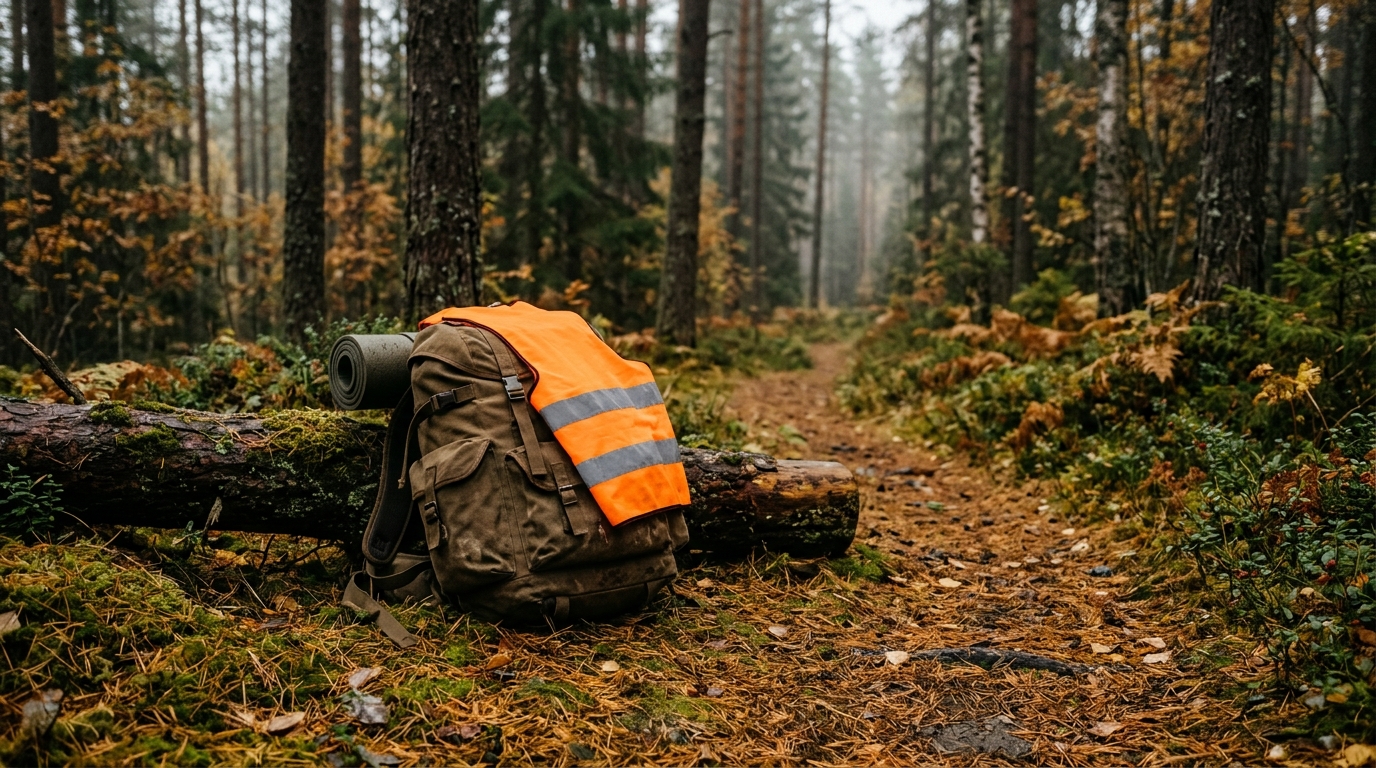
Autumn foraging overlaps with peak hunting seasons across many European regions, so wearing a high-visibility orange vest, hat, or pack cover helps hunters spot you clearly even in misty undergrowth. Check local hunting notices or municipal advisories before entering active game areas, stick to clear tracks during driven hunts, and make calm, steady noise when moving near dense thickets.
Respect wild animals by keeping plenty of distance from wild boar, moose, deer, bears, and venomous snakes such as adders, and keep dogs on a leash wherever local rules or wildlife protection require it. Wet bogs and peatlands also deserve caution: spongy sphagnum mats can conceal deep water pockets, so test questionable footing with a sturdy walking stick and detour around open mires rather than taking risky shortcuts.
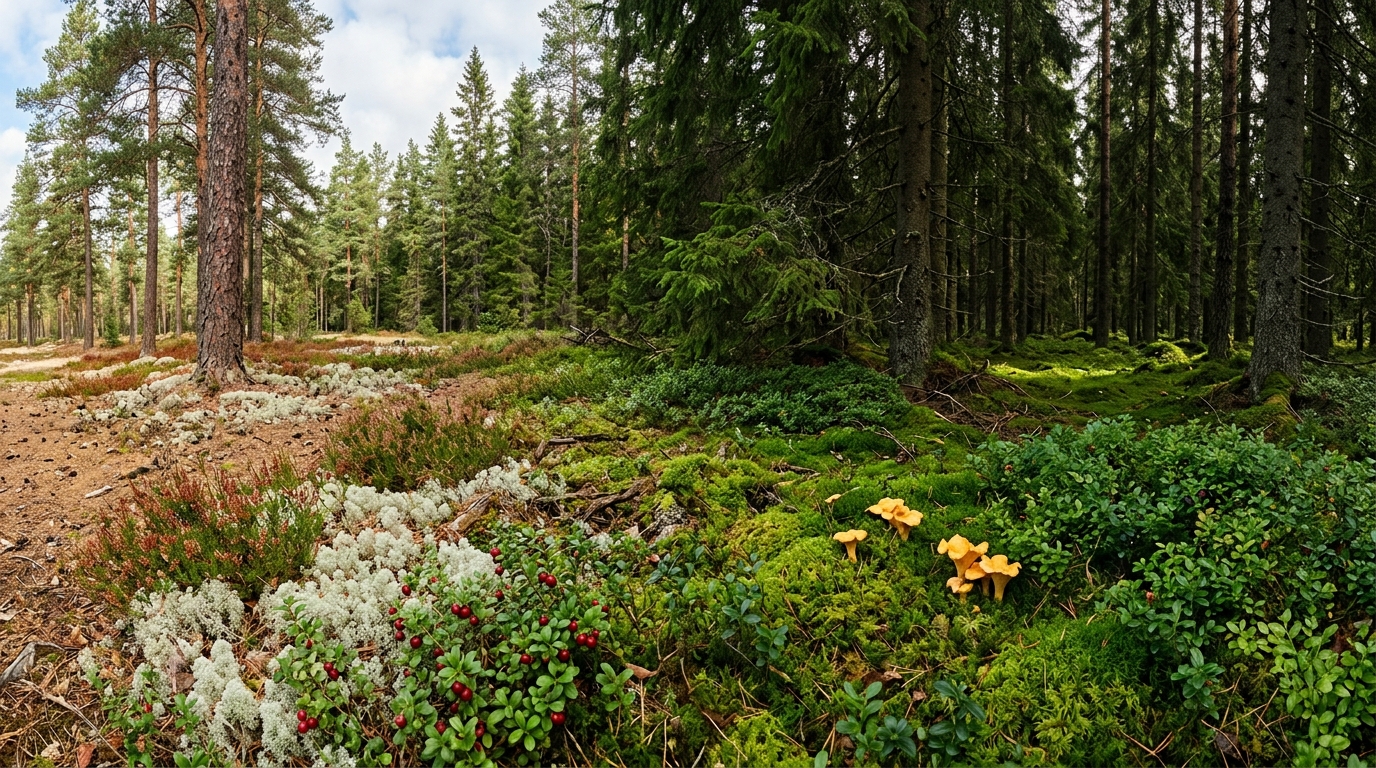
Hypothermia can develop even above freezing when rain, sweat, and wind chill your core, so avoid cotton base layers in favor of wool or moisture-wicking synthetics and pack a compact emergency foil blanket. Finally, apply strict discipline to mushroom and plant foraging: harvest and eat only species you can identify with 100 percent certainty using reliable references, never rely on guesswork or casual smartphone guesses alone, and contact a local poison information center immediately if anyone feels unwell after a meal.
Essential forest safety packing checklist
Keeping a dedicated small daypack stocked at the door removes guesswork before spontaneous morning trips. Even a short walk near a familiar road can stretch longer when you follow a promising ridge or detour around felled timber, so carrying the basics on every outing keeps small inconveniences from turning into serious problems.
Before each season, inspect battery levels, replace expired first-aid supplies, and confirm that your offline map regions are up to date.
- Fully charged smartphone with downloaded offline topographic and forest maps.
- Power bank and compatible charging cable sealed inside a waterproof bag.
- Reliable baseplate compass and basic familiarity with orienting to a road.
- Loud pea-less emergency whistle attached to a jacket zipper or pack strap.
- High-visibility orange vest, cap, or reflective band for hunting season and dusk.
- Waterproof outer shell, warm wool or synthetic layer, and compact foil emergency blanket.
- Drinking water, high-energy snacks, and a small first-aid kit with fine-tipped tick tweezers.
- Tick repellent, small headlamp or flashlight, and a sturdy walking stick if crossing uneven terrain.
Orienting yourself with Atveria in the forest
Good preparation combines reliable field gear with clear spatial context before you step off the gravel. Using Atveria ahead of your trip lets you inspect public forest stands, tree species, forest site types, stand age, and surrounding trails or access roads so you understand the shape of the woodland before you arrive.
While exploring outdoors, checking your live GPS location on the Atveria map helps you see where you stand relative to nearby forest compartments, drainage ditches, tracks, and roads, making it straightforward to orient back toward your parked vehicle or trailhead. Keep Atveria alongside downloaded offline maps, a power bank, and a compass so you always have dependable backups if cellular signal drops.