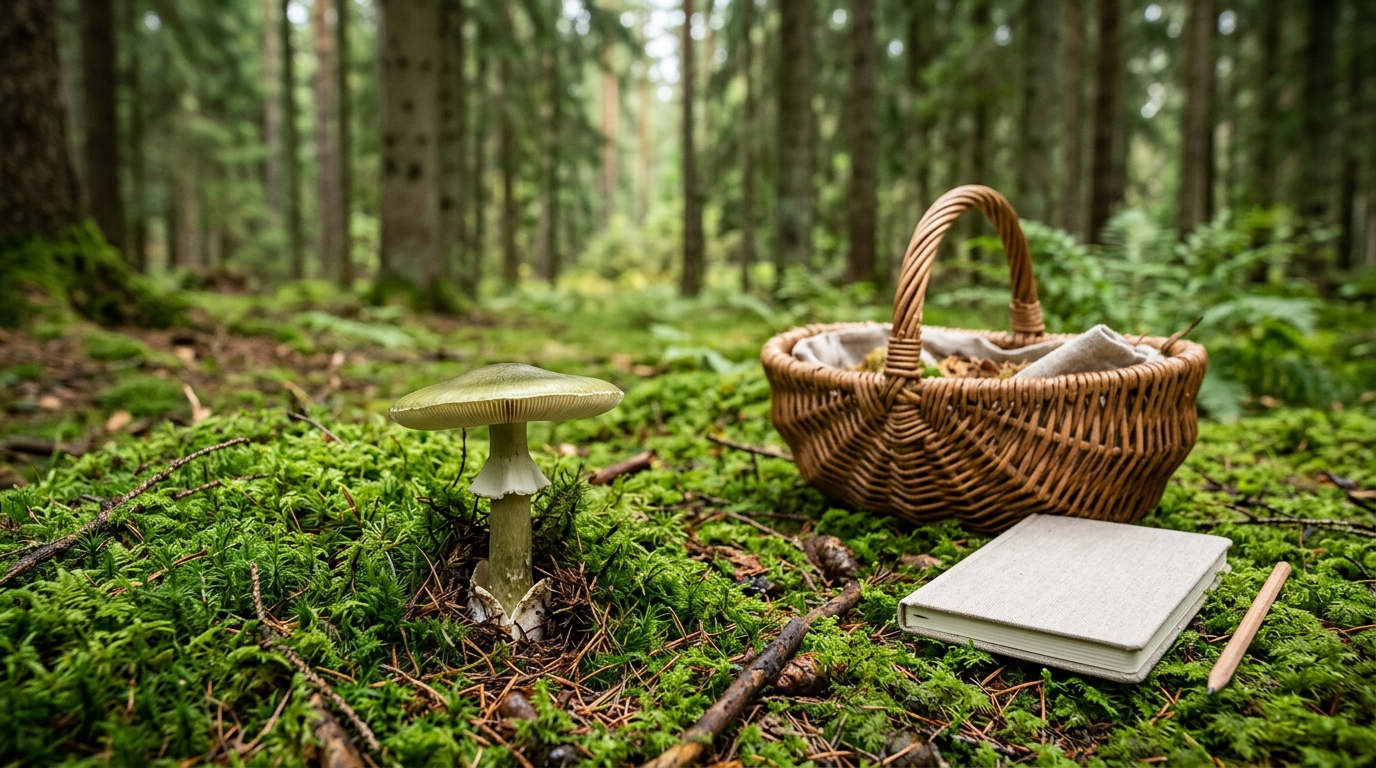
Why lookalikes cause the most serious mushroom poisonings
Across Europe, the vast majority of severe mushroom poisonings do not happen to people eating random unfamiliar fungi. Instead, they happen when a confident or hurried forager mistakes a deadly species for a familiar edible one. Rain can wash away cap scales or fade colors, young button stages hide crucial gill and stem traits, and overlapping habitats bring toxic and edible mushrooms within inches of each other.
Cutting mushrooms above the soil, tossing handfuls straight into a single basket, or judging a find from a quick top-down glance all multiply the risk. With Europe's deadliest fungi, a single misidentified cap cooked into an otherwise safe meal can cause life-threatening organ damage.
Death Cap and Destroying Angel vs. meadow mushrooms, parasols, and russulas
The Death Cap (Amanita phalloides) and Destroying Angel (Amanita virosa) contain heat-stable amatoxins that cause severe, often delayed liver and kidney failure. Together they account for most fatal mushroom poisonings in Europe, usually when mistaken for meadow mushrooms (Agaricus), parasol mushrooms (Macrolepiota), or greenish russulas (Russula).
Always inspect the gills, ring, and stem base together. Meadow mushrooms have pink gills that turn chocolate-brown with age and lack a base cup. Parasol mushrooms have shaggy brown cap scales, a movable double ring, and no cup at the base. Greenish russulas have brittle, chalk-like flesh that snaps cleanly and possess neither a ring nor a stem cup.
Young button-stage Death Caps and Destroying Angels can also mimic edible puffballs before the cap opens. Never cut white or greenish Amanita-like mushrooms at ground level: gently lift the entire base to check for a volva, and slice young round white mushrooms in half vertically to verify there is no hidden cap-and-gill outline inside.
- Gills: pure white and free from the stem in Death Cap and Destroying Angel, unlike the pink-to-brown gills of meadow mushrooms
- Stem base: a distinct cup-like volva or sac often tucked beneath soil or moss, absent in parasols, russulas, and Agaricus species
- Stem ring: a delicate skirt on the upper stem, though rain or handling can occasionally tear it off
- Flesh texture: fibrous stem flesh rather than the brittle, snapping flesh of russulas
Deadly Webcap and Jack-o'-lantern vs. chanterelles and funnel chanterelles
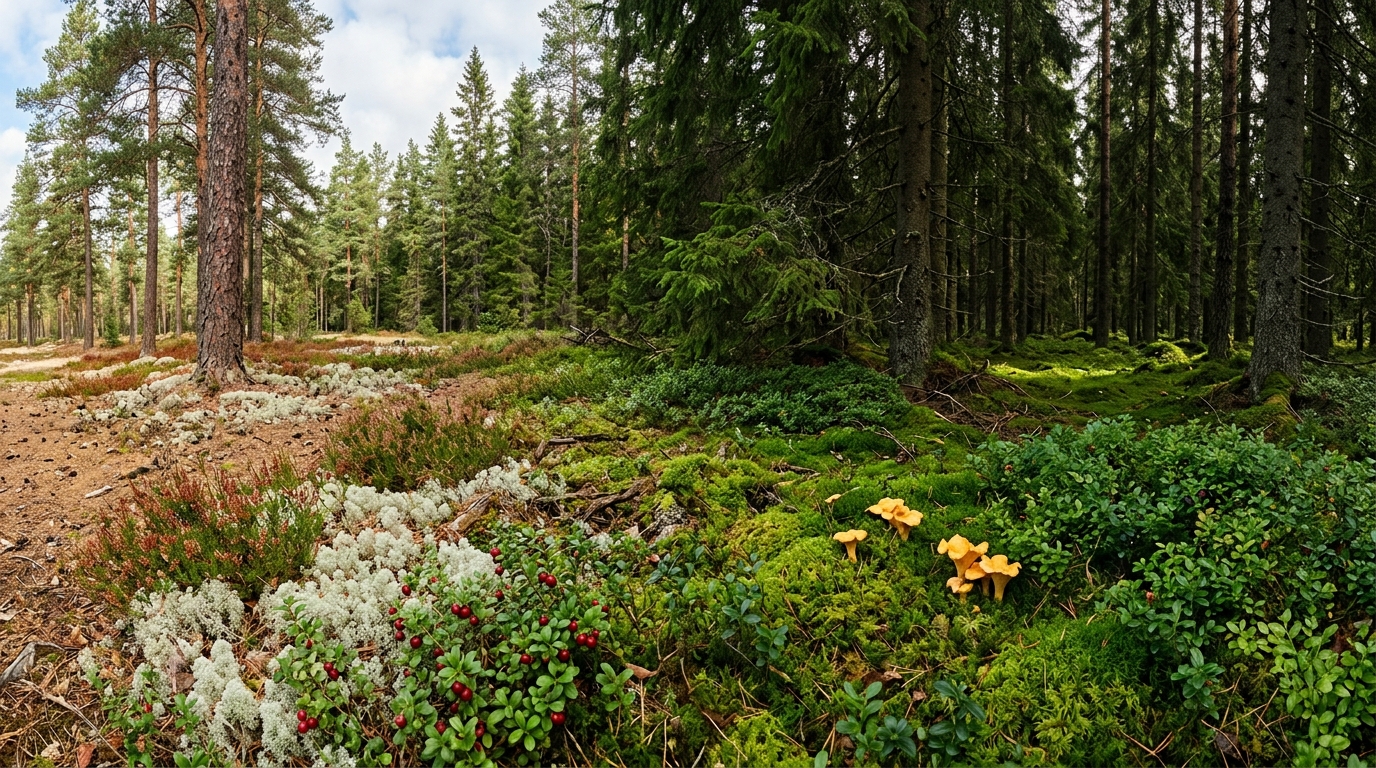
Chanterelles (Cantharellus cibarius) and funnel chanterelles (Craterellus tubaeformis) are among Europe's favorite wild mushrooms, yet dangerous lookalikes share their golden and brownish-orange palette. In mossy northern and temperate spruce or pine woods, the Deadly Webcap (Cortinarius rubellus) and its broadleaf cousin (Cortinarius orellanus) contain orellanine, a slow-acting kidney toxin whose symptoms can take days or up to two weeks to appear.
True chanterelles and funnel chanterelles never have true papery gills; they have blunt, forked, vein-like ridges running down the stem, and funnel chanterelles have hollow stems. Deadly Webcaps have true blade-like gills attached to the stem, rusty-brown spore dust (often visible on cobweb-like veil threads in young stems), and solid stems. Because Deadly Webcaps often grow right beside funnel chanterelles in damp moss, sweeping clusters by the handful is especially dangerous.
In Central and Southern Europe—from France and Spain to Germany and warmer oak or olive woodlands—the Jack-o'-lantern mushroom (Omphalotus olearius and Omphalotus illudens) causes severe gastrointestinal poisoning when confused with chanterelles. Unlike soil-growing chanterelles, Jack-o'-lanterns grow in dense clusters directly on wood, stumps, or buried roots, have sharp, crowded, unbranched true gills, and show orange-tinted flesh when cut.
False Morel vs. true morel in spring woodlands
Every spring, foragers search woodland edges, sandy soils, and disturbed ground for prized true morels (Morchella species), where the toxic False Morel (Gyromitra esculenta) appears in the same season. False Morels contain gyromitrin, a compound that converts into monomethylhydrazine in the body and can damage the liver, central nervous system, and red blood cells.
Inspecting both the cap surface and a lengthwise cross-section separates them clearly. A true morel has a honeycomb-like cap with regular pits and ridges and is completely hollow inside from cap tip to stem base. A False Morel has an irregular, brain-like, wrinkled reddish-brown cap and a chambered, cottony interior rather than a clean hollow cavity. Modern food safety authorities warn against eating False Morels even after parboiling, as toxic residues can persist and cooking fumes themselves are hazardous.
Why mushroom ID apps are not enough—and golden rules for the basket
Smartphone mushroom identification apps can help beginners learn broad fungal groups, but they must never be trusted to decide what goes into a cooking pan. Uneven forest light, wet caps, missing undersides, and hidden stem bases frequently cause photo-recognition tools to mislabel a deadly lookalike as an edible favorite.
Safe foraging depends on inspecting the whole specimen in hand—cap, gill or ridge structure, stem ring, base volva, spore color, flesh texture, smell, and substrate—and verifying with a regional field guide or local mushroom expert. Follow these golden safety rules on every forest trip:
- Never eat any mushroom unless you can identify its exact species with 100 percent certainty
- Lift the entire mushroom gently from the ground so you can inspect the stem base before keeping it
- Keep unknown or doubtful specimens strictly separate from edible mushrooms in your basket
- Check every individual mushroom carefully—never grab funnel chanterelles or meadow finds by the handful
- Never rely on AI apps, folk myths such as silver spoons or garlic, or signs of slug or deer nibbling
- Pick only fresh, firm mushrooms and cook wild species thoroughly unless a verified edible species is safe raw
What to do if mushroom poisoning is suspected
With dangerous lookalikes such as Death Cap and Deadly Webcap, waiting to see whether discomfort fades can waste crucial treatment time, because internal organ injury may already be developing during a quiet symptom-free phase. If anyone feels unwell after eating wild mushrooms—or if you suspect a toxic species entered a meal—act right away.
This article offers general foraging safety awareness and is not medical advice; always contact qualified emergency professionals immediately:
- Call 112 (the European emergency number) or your national poison control center immediately, even if symptoms appear mild or delayed
- Do not wait for severe symptoms—tell responders when the mushrooms were eaten and how many people shared the dish
- Keep all raw trimmings, cooked leftovers, vomit samples, or clear multi-angle photos for hospital identification
- Never attempt home remedies, force vomiting without medical guidance, or give milk or alcohol
Finding the right habitats with Atveria while keeping safety in your hands
Understanding forest ecology makes foraging both calmer and more deliberate. On Atveria, you can explore public forest stands across 13 European countries, filter by dominant tree species, forest site type, and stand age, and focus on woodland habitats suited to target species like chanterelles or boletes.
Habitat awareness also helps you stay vigilant—recognizing damp mossy spruce stands where Deadly Webcaps overlap with funnel chanterelles, or warm oak woods where Death Caps and Jack-o'-lanterns fruit. Atveria helps you locate promising forest habitats, while safe identification of every mushroom in your basket is always your responsibility.