Why stand age shapes everything beneath the canopy
Most foragers pay close attention to tree species and soil moisture, yet two pine forests ten minutes apart can deliver completely different baskets. One hillside yields nothing but dry needles, while the neighboring stand hides golden chanterelles beneath vibrant bilberry bushes. More often than not, the hidden variable behind that contrast is stand age.
In Nordic and Baltic forestry, woodlands are grouped into stand development classes that trace a forest lifecycle from bare ground to ancient canopy. Foresters classify clear-cuts and open regeneration areas, young stands, dense pole stands, middle-aged and maturing stands, mature stands, and finally old-growth woods. Each stage creates a distinct balance of sunlight, rain penetration, root competition, and decaying organic matter.
For wild berries and forest fungi, these structural shifts matter just as much as summer weather. Berry shrubs depend on direct light to flower and set fruit, whereas mycorrhizal mushrooms rely on vigorous host tree roots and stable humus layers. Learning to recognize stand development stages turns aimless wandering into purposeful foraging.
Clear-cuts and young regeneration: sunlight for wild berries
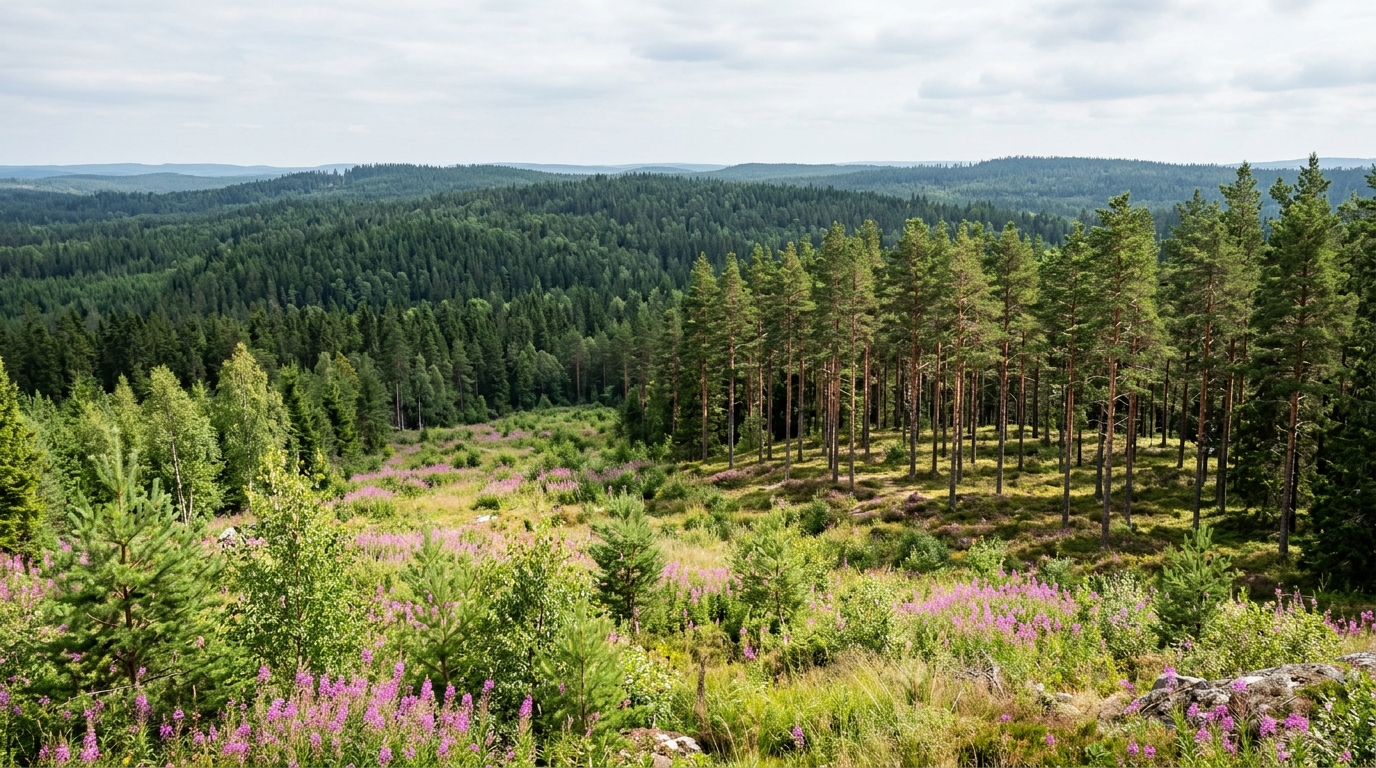
Immediately after timber harvest or major windthrow, a stand enters the clear-cut or bare land stage, followed over the next decade by young regeneration as planted or natural saplings take hold. With the tall canopy removed, full sunlight warms the topsoil and wakes dormant seeds and underground rhizomes. Pioneer grasses, fireweed, and sun-loving shrubs rapidly colonize the exposed mineral soil.
For berry pickers, three- to eight-year-old clearings and sunlit young stands are prime territory. Wild raspberries thrive in nutrient-rich pockets around decaying logging slash, while wild strawberries carpet warm slopes and old tractor tracks. Lingonberries often survive from the previous stand and fruit abundantly along sheltered sunny edges. By contrast, true forest mycorrhizal mushrooms largely disappear once host trees are felled, though saprotrophic species such as false morels occasionally fruit briefly on disturbed ground.
- Light and microclimate: full sun, wider day-night temperature swings, and faster surface drying on exposed soil
- Best foraging targets: wild raspberries, wild strawberries, and sun-ripened lingonberries along sheltered edges
- Mushroom expectations: scarce mycorrhizal species until young host saplings rebuild shared root networks
- Field care: watch for hidden branches, dense brambles, and ticks, and avoid trampling newly planted seedlings
Dense pole stands and the magic of thinning
As young saplings grow taller, their lower branches interlock and form a dense pole stand. In forestry this closed-canopy phase marks intense competition for light, water, and nutrients. A tight crown layer blocks most direct summer sunlight, plunging the forest floor into cool, uniform shade where flowering herbs and berry shrubs steadily retreat.
Unthinned pole stands are notoriously quiet for foragers. Thick layers of slow-decomposing needles blanket the soil, moss growth stalls, and crowded surface roots exhaust light rainfall before it penetrates deeper. Many beginners walk through twenty-year-old spruce or pine plantations and wonder why the woods look lifeless even after steady rain.
That picture transforms after commercial thinning. When foresters selectively remove suppressed or crowded stems to give future crop trees room to expand, sunlight, warmth, and rainwater reach the ground once more. Decaying stumps feed soil microbes, remaining host trees surge in root vigor, and within two to four seasons thinned stands frequently reward foragers with fresh flushes of chanterelles and young boletes.
- Thinning strips and skid trails: slightly compacted sunlit margins often warm up fastest and trigger early chanterelle patches
- Moss recovery: bright green feather moss returning over needle litter signals an improving moisture balance
- Crown spacing: dappled sunlight between tree tops supports both vigorous host roots and understory flora
- Typical age window: roughly 20 to 45 years depending on site fertility, tree species, and climate zone
Middle-aged and maturing stands: prime chanterelle and porcini woods
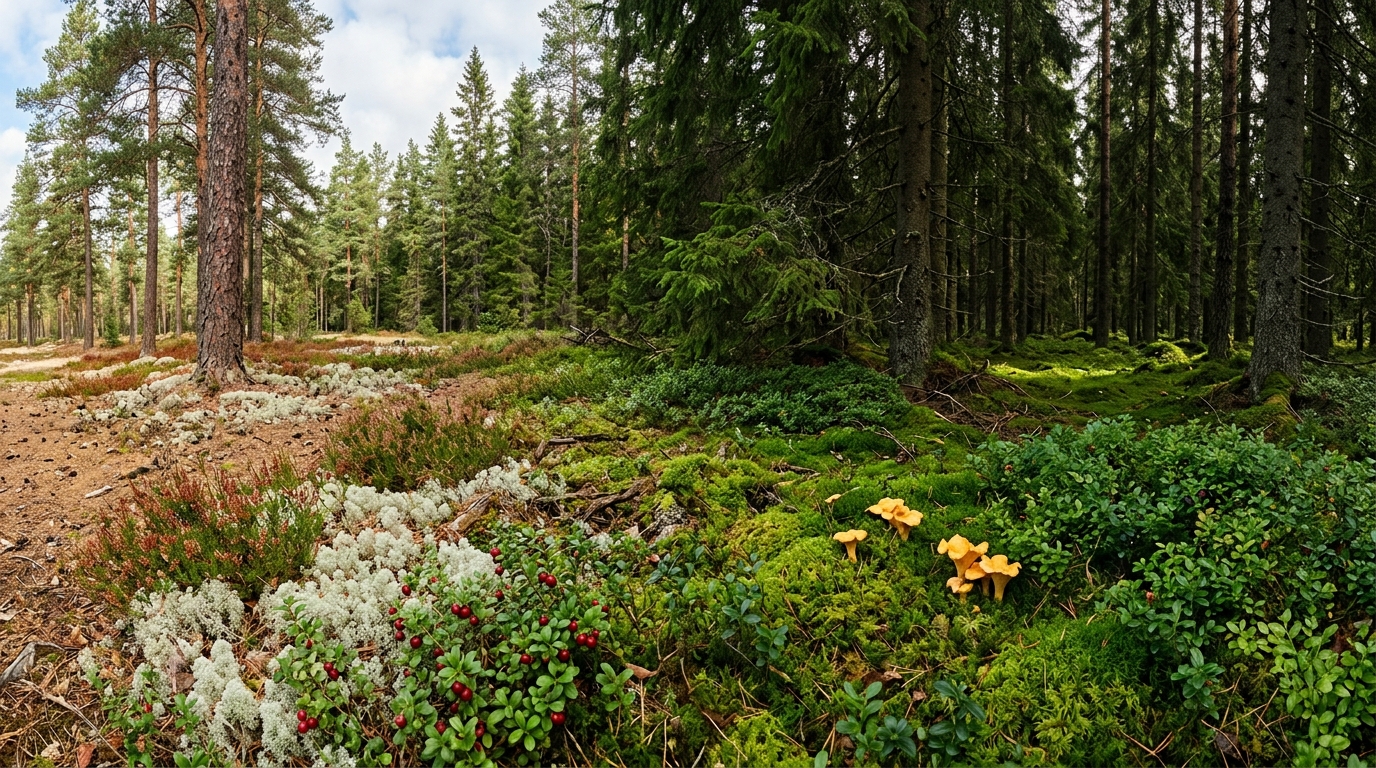
Once a forest moves beyond early thinnings into its middle-aged and maturing stages, it enters an ecological sweet spot. Trees carry tall, well-spaced trunks and deep root systems, while natural gaps and earlier thinnings admit gentle, dappled light. Beneath the canopy, resilient carpets of bilberry, lingonberry, and feather mosses anchor a cool, breathable humus layer.
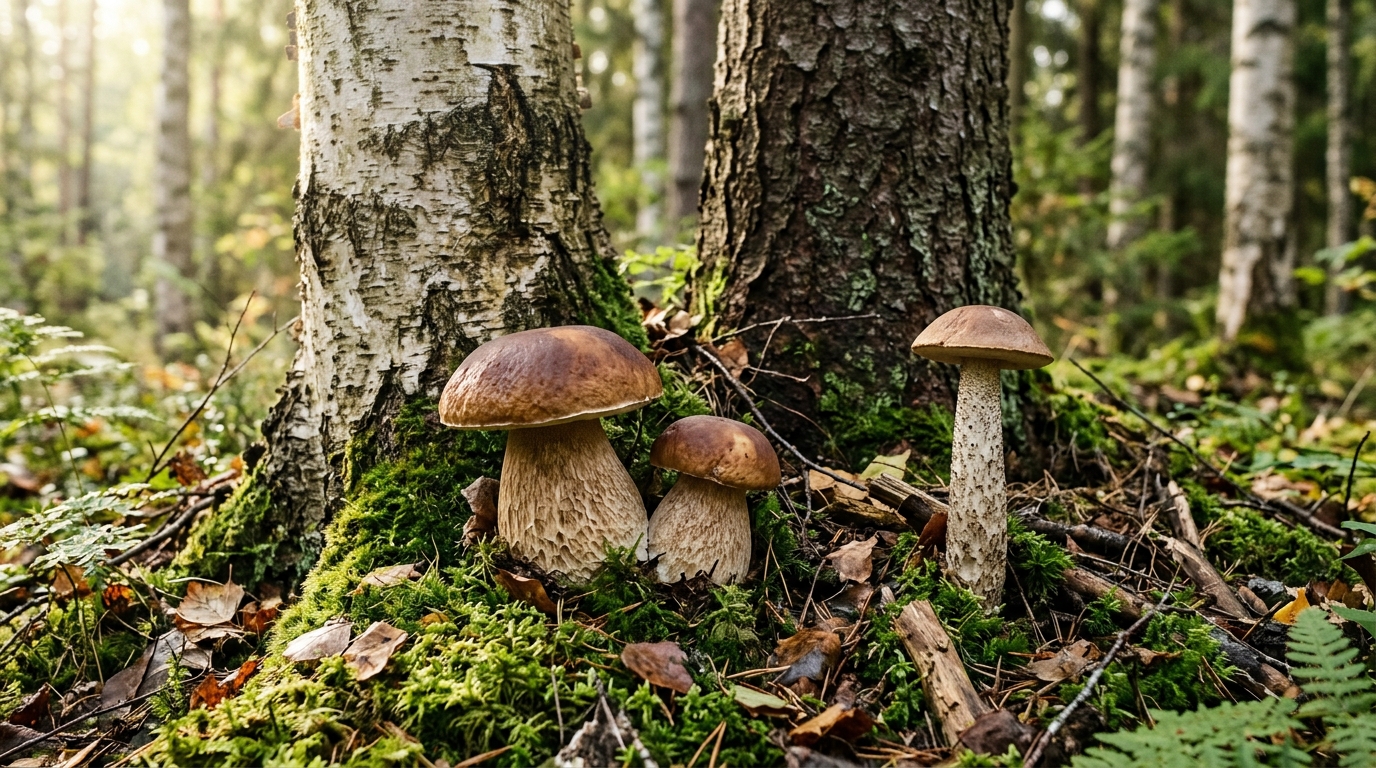
This balance makes middle-aged and maturing pine, spruce, and mixed birch stands peak ground for prized ectomycorrhizal fungi. Chanterelles favor moist, mossy slopes and trail margins in middle-aged woods, while porcini and other boletes thrive around vigorous, sun-warmed host roots during late-summer weather shifts. Birch boletes, milkcaps, and russulas also fruit dependably across these decades.
Berry and mushroom seasons overlap seamlessly here. In mid-summer, well-lit maturing pine and spruce forests offer calm bilberry picking without the tangles of a clear-cut. A few weeks later, those same mossy paths turn golden with fungi, making maturing stands the backbone of reliable autumn outings.
Mature and old-growth stands: trumpets, hedgehogs and conservation care
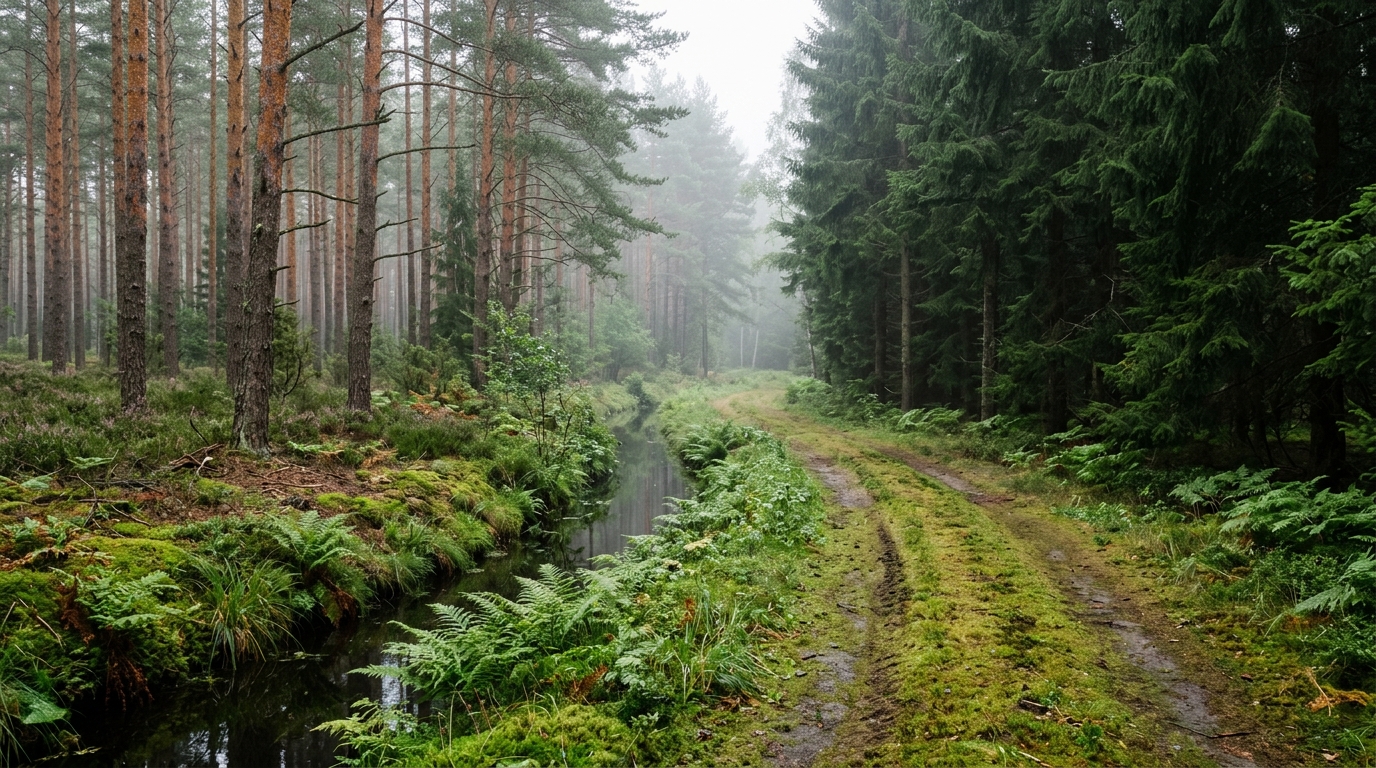
In mature stands approaching harvest age, trees reach full stature and cast deeper, steadier shade. In humid spruce-dominated and mixed forests, thick moss cushions and cool, stable humus layers suit late-autumn specialists. Foragers find generous clusters of wood hedgehogs, winter chanterelles, and black trumpets thriving well into October, long after summer boletes have faded.
Beyond commercial rotation age lie old-growth and over-mature stands defined by multi-layered canopies, veteran trees, standing snags, and abundant fallen logs. While atmospheric and rich in biodiversity, true old-growth woods rarely produce the dense berry carpets of younger stands. Instead, their chief ecological role is sustaining specialized lichens, polypores, insects, and cavity-nesting birds absent from managed plantations.
Foraging in old stands therefore calls for heightened respect and legal awareness. Many Nordic and Baltic old-growth parcels lie inside strict nature reserves, national parks, or protected woodland key habitats where picking or off-trail entry may be restricted. Always verify local rules before entering, leave rare wood-decay fungi untouched, and avoid disturbing deadwood habitats.
- Clear-cuts and young stands (0–15 years): wild raspberries, wild strawberries, and sunny edge lingonberries
- Closed pole stands (15–30 years): sparse harvests until thinning restores light and surface moisture
- Middle-aged and maturing stands (30–70 years): bilberries, chanterelles, porcini, and diverse milkcaps
- Mature and old-growth stands (70+ years): winter chanterelles, black trumpets, wood hedgehogs, and conservation sensitivity
How Atveria helps you read stand age on the map
Judging forest age from standard aerial imagery alone is surprisingly difficult. On ordinary satellite maps, a dense twenty-year pole stand and an eighty-year spruce forest can look like identical blocks of dark green. In reality, national and regional forest inventories across Nordic and Baltic countries record stand age, development class, dominant tree species, and site type in public cadastre registers.
Atveria brings these official forest register attributes directly onto an interactive foraging map. By combining stand age and development class with tree species and forest site conditions, the platform highlights public stands that match the preferred age window for chanterelles, porcini, hedgehogs, or wild berries. Rather than guessing from the roadside, you can plan targeted, respectful trips straight to promising woodland stages.