Living Tree Partners vs. Forest Recyclers
At first glance, a fallen trunk covered in moss and bracket fungi can look like a sign of decline. In reality, deadwood is one of the richest engines of life in a woodland. Without dying and decaying timber, nutrients such as nitrogen, phosphorus and potassium would remain locked inside woody tissue for decades, starving future generations of trees.
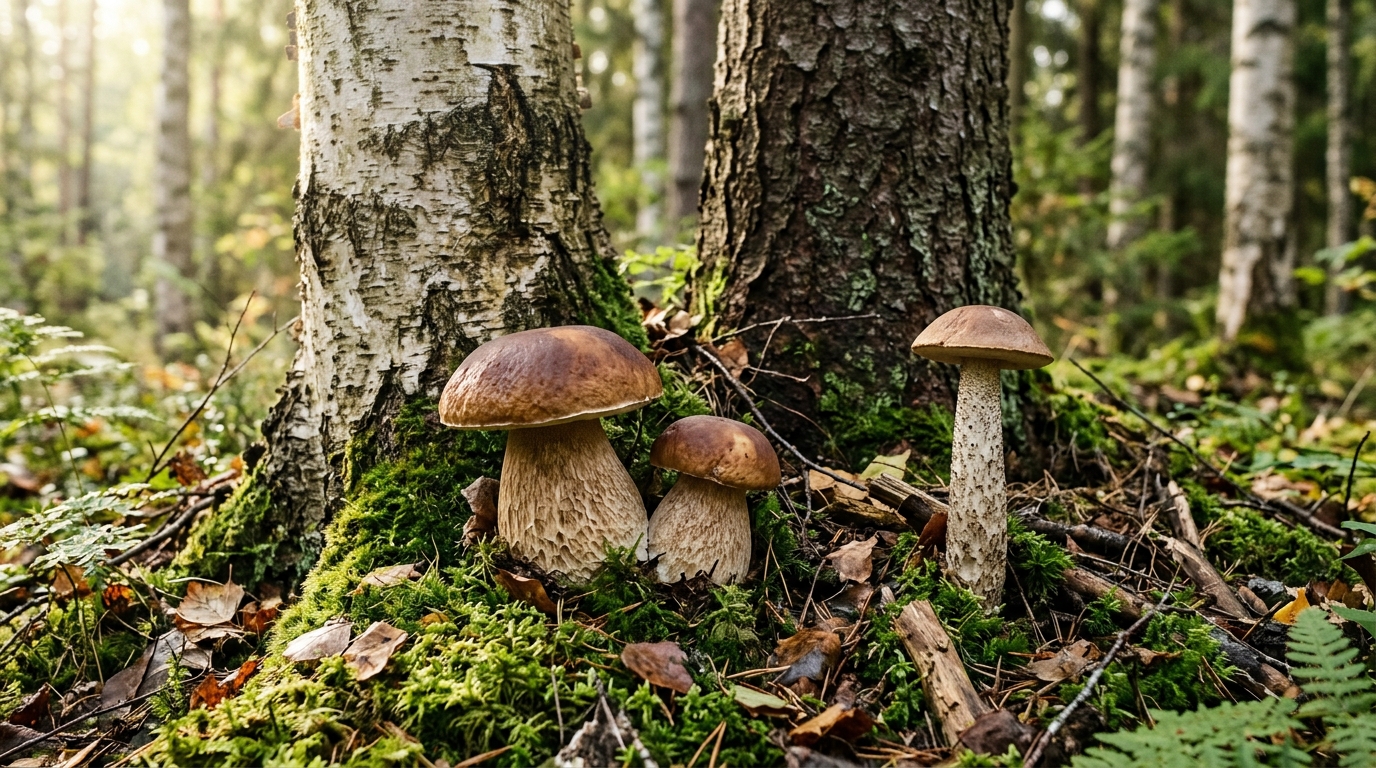
Fungi perform this recycling in two fundamentally different ways. Mycorrhizal fungi, including chanterelles, porcini and milk caps, form symbioses with the roots of living trees, trading soil minerals and water for sugars made by photosynthesis. Saprotrophic or wood-decaying fungi work after a tree weakens or falls, secreting enzymes that dismantle tough wood polymers.
Once those enzymes unlock carbon and mineral nutrients, bacteria, invertebrates and fine roots can absorb them again. A single decaying oak or spruce trunk therefore feeds the surrounding stand slowly over decades, acting as a steady nutrient bank rather than releasing everything in a single burst.
White Rot and Brown Rot Explained Simply
Tree trunks owe their strength to two main structural compounds: pale, fibrous cellulose and dark, rigid lignin that glues plant cells together. Different groups of saprotrophic fungi specialize in breaking down one or both of these building blocks, leaving behind completely different textures in the rotting log.
This chemical division of labor shapes the forest soil itself. Because brown-rotted wood breaks down lignin much more slowly, it forms spongy, moisture-retaining humus blocks that persist on the woodland floor for decades and shelter roots during dry summers.
By contrast, white-rotted wood crumbles more quickly into loose organic litter that mixes directly into upper topsoil layers. Both decay pathways complement one another, often operating side by side on different sections of the same fallen trunk or root plate.
- White rot: Fungi such as turkey tail, oyster mushrooms and tinder polypore break down both dark lignin and cellulose. The remaining wood turns pale, stringy or fibrous and feels soft between the fingers.
- Brown rot: Fungi such as red-belted polypore and chicken of the woods digest cellulose and hemicellulose while leaving modified brown lignin behind. The timber shrinks and cracks into brittle, rust-brown cubes.
Snags, Fallen Logs and Nurse Logs as Microhabitats
As fungi soften timber from the inside out, deadwood transforms into a layered neighborhood for wildlife. Standing dead trunks, known as snags, warm up quickly in sunlight and provide dry nesting cavities, while shaded fallen logs stay cool and damp even during summer droughts.
Once a log loses its bark and absorbs rainwater, it often becomes a nurse log. Mosses, liverworts and ferns colonize the damp surface first, creating a thin seedbed where spruce, birch or rowan seedlings can root above the dense competition of forest-floor grasses and shrubs.
Even the underside of a log and the hollowed root pit left by windthrow serve essential roles. Small vertebrates use the sheltered tunnel beneath trunks as winter corridors under snow, while mineral soil exposed by upturned roots gives pioneer herbs and birch seeds rare bare ground to germinate.
- Wood-boring beetles and solitary bees tunnel into sun-warmed snags and bark crevices.
- Woodpeckers excavate nesting holes in fungus-softened trunks, which owls, bats and small mammals later reuse.
- Amphibians, slugs and ground beetles shelter beneath damp fallen logs to avoid heat and predators.
- Bryophytes, lichens and young tree seedlings establish directly on spongy, moisture-holding nurse logs.
Edible Saprotrophs vs. Protected Deadwood Fungi
Foragers encounter saprotrophic fungi throughout the year, sometimes even during mild winter thaws when mycorrhizal species are dormant. Learning to recognize common edible wood-dwellers alongside rare red-listed species ensures both safe meals and responsible conservation.
Always check national and regional protection lists before harvesting any fungus growing on deadwood, especially in nature reserves or old-growth stands. If a rare or unfamiliar species appears on an ancient trunk, take a photograph and leave the fruiting body intact to release its spores.
When harvesting common edible wood mushrooms, cut or twist gently without tearing bark or disturbing the rotting wood structure underneath. Leaving older, waterlogged caps behind preserves insect larvae and allows remaining mycelium to fruit again in future seasons.
- Oyster mushrooms (Pleurotus species): Fan-shaped, pale grey to brownish clusters growing on deciduous logs from autumn into winter; prized for firm texture and mild flavor.
- Velvet shank (Flammulina velutipes): Small orange-capped winter clusters with dark velvety stems on dead hardwoods; avoid confusion with deadly Galerina marginata by checking for white spore prints and no ring.
- Honey fungus (Armillaria species): Golden-brown clusters on stumps and buried wood; technically both parasitic and saprotrophic, and must be boiled or cooked thoroughly before eating to avoid stomach upset.
- Lion's mane and coral tooth fungi (Hericium species): Striking white, cascade-like deadwood specialists that are legally protected or red-listed across many European countries—admire and photograph them, never pick.
Why Modern Sustainable Forestry Leaves Deadwood Behind
For much of the twentieth century, forest management aimed to clear fallen branches, diseased stems and dead trees to keep stands tidy and limit bark beetle outbreaks. Ecologists later showed that stripping a forest of deadwood removes habitat for a vast share of forest insects, lichens and fungi, weakening long-term ecosystem resilience.
Today, sustainable and certified forestry practices across Europe intentionally retain habitat trees, high stumps and decaying logs during harvesting. Leaving old broadleaves, windthrown trunks and scattered coarse woody debris connects biodiversity across managed landscapes without compromising healthy timber regeneration.
High-cut stumps created during thinning or final felling imitate natural wind-snapped trunks and quickly attract saprotrophic polypores and cavity-nesting birds. Over several decades, those retention features bridge the gap between young commercial stands and mature woodland habitats.
Finding Mature and Diverse Stands on Atveria
Deadwood richness varies sharply with forest age, tree composition and moisture regime. Young plantations rarely hold large decaying trunks, whereas older mixed stands, damp herb-rich forests and riparian woodlands naturally accumulate both standing snags and moss-covered logs.
On Atveria, you can inspect public forest stands by dominant tree species, forest site type and stand development class. Filtering for mature and older stands helps nature enthusiasts and foragers explore diverse habitats where saprotrophic fungi thrive, while keeping harvests strictly within local foraging and conservation rules.
Comparing birch, aspen, oak and spruce stands on the map also reveals why different deadwood species appear in different corners of the same forest. Paying attention to site history and stand structure makes every woodland walk richer, whether you are photographing rare polypores or gathering winter oyster mushrooms.